
Price the Engine, Not the Average
Fixed-price shop visits are won or lost at the bid. How engine MROs can use the data they already own to predict workscope and price the specific engine.

Fixed-price shop visits are won or lost at the bid. How engine MROs can use the data they already own to predict workscope and price the specific engine.

On the GTF and LEAP, nobody knows yet which parameters drive deterioration. Why engine prognostics needs a closed loop that re-learns with every shop visit.

Why prediction models for aircraft engines need engineering knowledge, not just scale, and what that means for forecasting cost and residual value you can defend.
Why generic graph retrieval struggles with airworthiness records, and what an aviation version has to account for. FinTwin® Engineering powered by Microsoft Azure and Databricks Data Intelligence Pla
I have now raised this twice and developed it neither time. In the piece on the five layers it was memory engineering, and I admitted I had underrated it. In the piece on context layers it was the thi
I wrote recently about the five layers sitting under any AI system that does real work, and said context was the one most teams skip. The reasonable follow-up was where context is actually supposed to
Prompt engineering is the smallest of five layers behind a working AI system. Here are the other four, and what they look like on an aircraft redelivery.

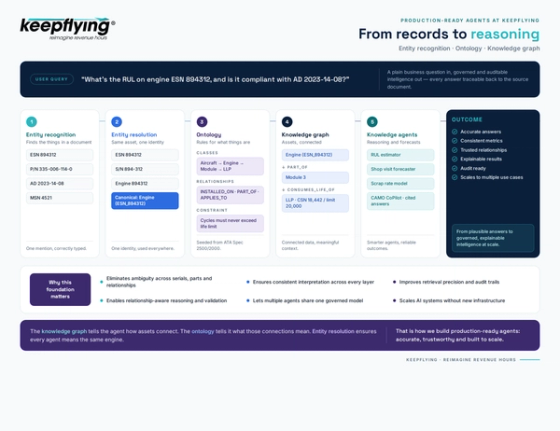
Aviation AI doesn't fail because it reads records wrong. It fails because it doesn't know what the records mean. Here's what an ontology fixes, and what skipping it costs.

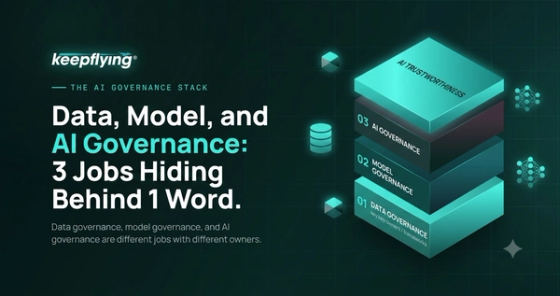
Data governance, model governance and AI governance are different jobs with different owners. How the three layers connect, where guardrails fit, and why AI trustworthiness depends on all of them.